Online Lecture Series
IV Conference in Glycoscience
January – May 2027. TEAMS platform
Organized by the Carbohydrates Division, Spanish Royal Society of Chemistry
With the support of IQS
Register to each individual conference to receive a TEAMS invite for each session
Dr. Roberto Adamo
GSK Vaccines Institutes for Global Health, IT
Title: Elucidating the Impact of the Conjugation Site in the Immunogenicity of Glycoconjugate Vaccines
Online lecture: January 14th, 2027, 12:00 h (CET)
Free registration: REGISTER HERE
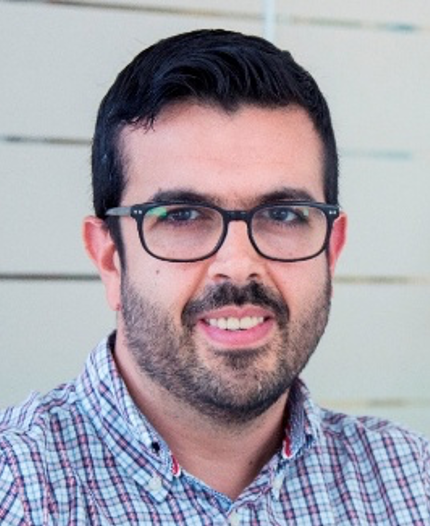 Roberto holds a PhD in Pharmaceutical Science and, after two post-doctoral fellowships at the NIH and Utrecht University, he moved to Novartis here in Siena. During his career 20 years career in industry (Novartis and GSK), he has developed a strong expertise in carbohydrate chemistry and glycoconjugate vaccines. He has contributed to 17 patents, and he has authored more than 100 peer-reviewed publications. Over the last years he has served as a Platform and Project Leader contributing to transition different vaccine candidates into clinical development. From 2025 he has joined as Senior Project Leader GSK Vaccine Institute for Global Health with the mission to develop vaccines for low- and middle-income countries.
Dr. Daniel Bojar
Department of Chemistry and Molecular Biology, University of Gothenburg, SE
Title: «A Sweet Life: Understanding Glycobiology with AI»
Online lecture: February 18th, 2027, 12:00 h (CET)
Free registration: REGISTER HERE
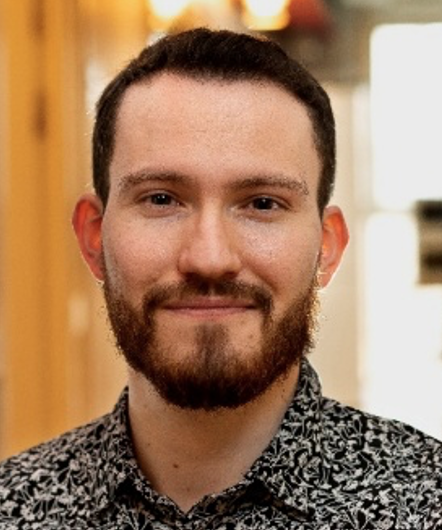
Dr. Daniel Bojar is an associate professor in bioinformatics at the Wallenberg Centre for Molecular and Translational Medicine & the Department of Chemistry and Molecular Biology at the University of Gothenburg in Sweden, focusing on machine learning and data science in the field of glycobiology. He is also Deputy Director of the Centre for Modelling Life at the Membrane with AI (CEMERAI), which he has co-founded. He obtained his PhD in mammalian synthetic biology at ETH Zurich and continued his postdoctoral training in computational biology at MIT & Harvard University. His group develops and applies methods to discover sequence-to-function associations and biological roles of glycans via a plethora of approaches. Daniel was awarded an ERC Starting Grant and an SSF Future Research Leader flagship grant, and was recognized as a «Rising Star» by the journal Advanced Science. He was also featured on the 2022 Forbes 30 Under 30 Europe list for work in Science & Healthcare and is the recipient of the 2026 Young Researcher Award from the International Carbohydrate Organization and the David Y. Gin New Investigator Award.
Dr. Sandra van Vliet
Department of Molecular Cell Biology and Immunology, Amsterdam UMC, NL
Title: Site-specific reprogramming of the tumor-immune microenvironment through sialic acids
Online lecture: March 18th, 2027, 12:00 h (CET)
Free registration: REGISTER HERE
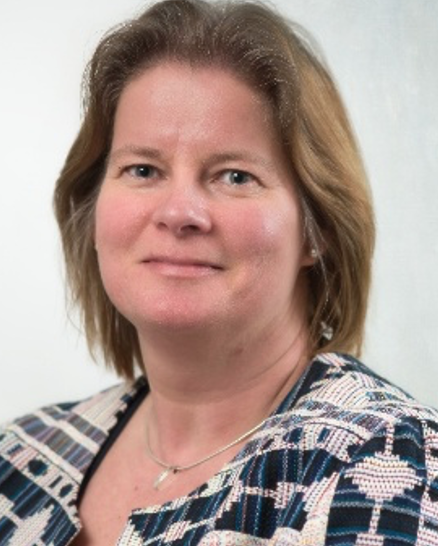
As a glyco-immunology specialist at Amsterdam UMC, Dr. van Vliet studies how immune cells employ glycosylation patterns as a blue-print to fine-tune immune responses. She has characterized multiple lectin receptors and was the first to describe the elaborate carbohydrate recognition profile of the C-type lectin MGL, demonstrating its unique specificity for tumor-associated glycans and its predictive value for patient survival and metastatic potential of tumors. With her own independent research group she aims to unravel how aberrant tumor glycans induce immune evasion as well as resistance to immunotherapy. Dr. van Vliet is a recipient of the female career award NWO-ASPASIA, which she used to establish the “Amsterdam UMC Women in Science Fund” that aims to accelerate the careers of young female scientists by providing grants for international work visits.
Dr. Valentin Wittmann
Department of Chemistry, University of Konstanz, DE
Title: Chemical Tools for Glycobiology: Carbohydrate-Lectin Interactions and Metabolic Glycoengineering
Online lecture: April 15th, 2027, 12:00 h (CET)
Free registration: REGISTER HERE
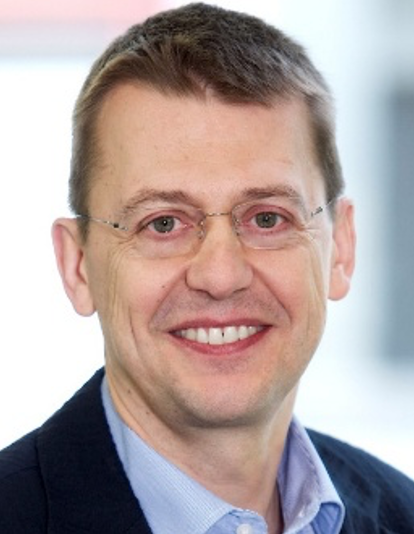
Valentin Wittmann studied Chemistry at the Goethe-University of Frankfurt (Germany). In 1994 he obtained a PhD from the Technical University of Munich (Germany) for his work on C-glycopeptides under the supervision of Prof. Horst Kessler. Subsequently, he carried out postdoctoral research with Prof. Christian Griesinger at the Goethe-University of Frankfurt (Germany) in the field of stable-isotope-labeled oligonucleotides and with Prof. Chi-Huey Wong at The Scripps Research Institute in La Jolla, California (USA) working on the chemoenzymatic synthesis of oligosaccharides. In 1997 he returned to Frankfurt to start independent research. Since 2003 he is professor of organic/bioorganic chemistry at the University of Konstanz (Germany). From 2006 until 2011 he was Dean of Studies and from 2016 until 2020 and from 2024 until 2025 head of the Department of Chemistry. His main research area is the chemical biology of carbohydrates including metabolic glycoengineering, investigation of multivalent carbohydrate-protein interactions, and RNA-targeting antibiotics.
Dr. Lucy Crouch
University of Birmingham, UK
Title: The use of N-glycans from breastmilk by infant-associated Bifidobacterium.
Online lecture: April 29th, 2027, 12:00 h (CET)
Free registration: REGISTER HERE
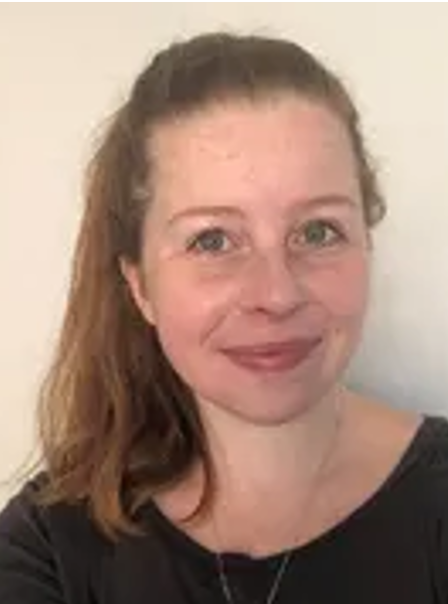
Lucy Crouch is a Wellcome Trust and Royal Society Sir Henry Dale Fellow at the University of Birmingham. She is a glycobiologist focussing on how human-associated microbes access host glycans and polysaccharides in the mucosal environment, predominantly for those species living in the large intestine. During her post-doc years, she characterised carbohydrate-active enzymes (CAZymes) with unusual activities towards highly recalcitrant plant biomass, with the goal of improving the yield of biofuel from biomass. Later projects were centred around the human colonic microbiota and the high numbers of CAZymes encoded in their genomes that break down human-derived glycans. Through this work Lucy has discovered novel mechanisms that bacteria use to break down host-produced glycans, discovered new enzyme families, and characterised entire enzyme systems that individual species use to access specific nutrients. She established her lab in 2020 and has several projects running on both commensals and pathobionts.
Dr. Katrine Schjoldager
Center for Glycocalyx Research, University of Copenhagen, DK
Title: From Genetic Engineering to Functional Glycobiology
Online lecture: May 20th, 2027, 12:00 h (CET)
Free registration: REGISTER HERE
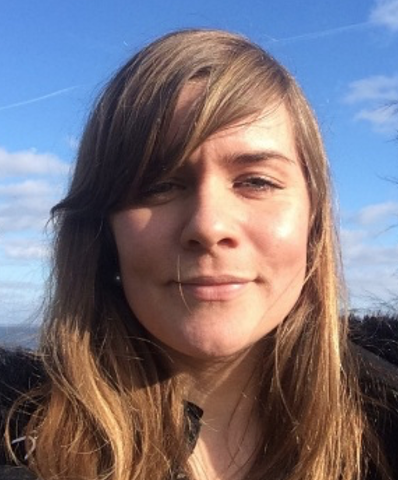
Dr. Schjoldager is an Associate Professor at the Copenhagen Center for Glycocalyx Research, University of Copenhagen. A major focus in her lab is to explore the biophysical and functional impact of protein glycosylation. In this pursuit, she established methodologies to identify native glycosylation in human and animal sources using mass spectrometry and characterising the molecular function. These studies have revealed wide functions of protein O-glycosylation, e.g. on LDLR-like endocytic receptors (LRPs) and peptide hormones and neuropeptides. Her lab has a strong focus on cell and animal models of deficient glycosylation and direct translation through several clinical trials. As a graduate student, she was trained in peptide chemistry with Prof. Hans Sjöström (2007) to understand the role of gliadin peptides in celiac disease. For her doctoral work, she joined Prof. Henrik Clausen (PhD 2012) at the Center for Glycomics, where she established techniques and methodologies to explore the function of glycosyltransferases and map site-specific O-glycosylation at the proteome scale. With her Sapere Aude Young Elite Researcher Post Doc award (2015), in collaboration with Prof Dan Rader, UPenn, she validated a genome-wide association study (GWAS) linkage between O-glycosylation (the GALNT2 gene) and dyslipidemia in multiple species, including rare individuals with homozygous loss, leading to a first clinical characterisation of GALNT2-CDG patients who have multisystemic disease including intellectual disability and epilepsy. In 2017, she was awarded the L’Oréal-UNESCO For Women in Science Award and an Excellence Grant for Young Researchers, and in 2018, she was appointed Associate Professor in glycobiology. In 2023, she was awarded the Hallas Møller Ascending Investigator grant and the Sapere Aude Research Leader grant, and in 2022, she was selected for the Professor Promotion Programme at UCPH. URL for website: https://icmm.ku.dk/english/research-groups/schjoldager-group/